

I spent one month in Japan, and one small observation kept nudging at me. People there eat differently. Meals feel deliberate. There is attention to colour, texture and balance, and portions are noticeably smaller. Restaurants rarely offer seconds. In supermarkets, fruit and vegetables are often wrapped individually. Even a small bunch of grapes or a single peach is presented like a tiny gift.
At first glance, these may look like cultural quirks. Over time, however, I realised they reflect something deeper. There is a quiet thoughtfulness in how food is prepared, served and eaten. That thoughtfulness translates into kindness. Kindness to the body, kindness to appetite and kindness that shows up not through indulgence, but through restraint and care. And that kind of kindness matters for health and for parenting.
Small portions and thoughtful boundaries
A typical Japanese meal is visually balanced. There may be a bowl of rice, a small portion of fish or other protein, miso soup, pickles and a few vegetables. Each item has its own place. Plates, trays and bento boxes naturally divide food into modest portions.
Large, overflowing plates meant for one person are rare. Free refills are uncommon. Even convenience foods are compact. In supermarkets, many items are individually wrapped, not to encourage excess, but to signal that this amount is enough.
These visual boundaries do something subtle but powerful. They remove pressure. You are not expected to overeat. You are gently guided to eat what your body needs, not what your eyes are tempted by. That, in itself, is a form of kindness.
For parents, this offers an important insight. When boundaries are built into the environment, children do not need constant reminders or warnings. The structure does the teaching.
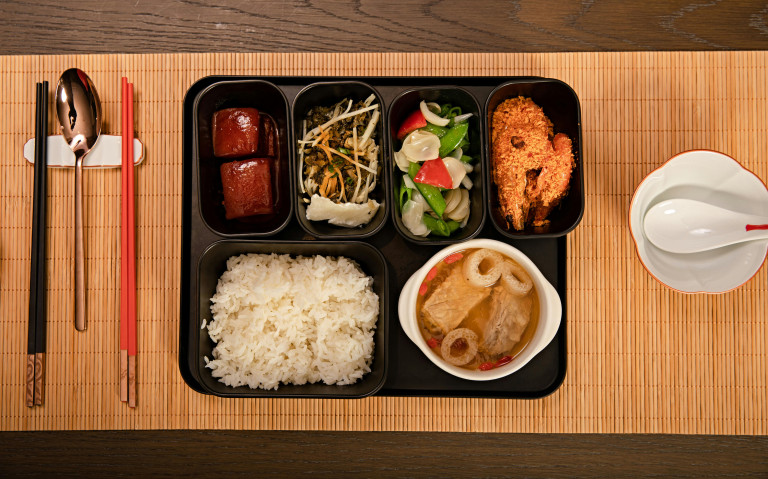
Photo by Change C.C.
Hara hachi bu and listening to the body
One well-known Japanese principle, especially associated with Okinawa, is hara hachi bu, which means stopping when you are about eighty percent full. It is often discussed in longevity research, but at its heart, it is a compassionate practice. Instead of pushing the body to discomfort, hara hachi bu encourages listening. Eating slowly. Pausing. Allowing the body time to say, I have had enough.
This is not about denial or control. It is about respect. In a world that often equates love with overfeeding, especially within families, hara hachi bu reframes care as knowing when to stop. Children learn this best when they see it modelled. When parents say, I am almost full, I will stop here, children absorb the idea that stopping early is normal and healthy.
Portion size shapes behaviour more than we realise
Research consistently shows that portion size influences how much people eat, often without conscious awareness. Larger plates, bowls and packages lead to higher calorie intake, even when hunger levels are the same. Studies involving Japanese populations have found that increasing staple portions, such as rice, increases immediate intake. The body responds to what is placed in front of it.
Japan’s culture of smaller, compartmentalised portions reduces automatic overeating. It removes the need for constant self discipline. Instead of asking individuals to fight temptation, the environment supports moderation. That is kindness built into daily life. At home, this matters greatly. When parents serve smaller first portions, use smaller plates or create natural compartments, children are guided without being controlled. Asking for more becomes a conscious choice rather than a reflex.
Japan’s health picture and realistic complexity
Japan has one of the lowest obesity rates among high income countries. This contributes to strong health outcomes and long life expectancy. At the same time, diabetes is not absent. Prevalence estimates range from the low single digits to around eight percent, depending on how data is measured. Factors such as an ageing population, carbohydrate heavy staples like rice and lifestyle changes among younger generations all play a role. Lower average body weight reduces risk across the population, but it does not make Japan immune. Health, like parenting, is never about one factor alone. It is shaped by patterns over time.
Kind eating reduces metabolic strain
The pathway is simple. Consistently large portions increase calorie intake, strain metabolism and raise the risk of insulin resistance and type two diabetes. Even modest reductions in energy intake can improve weight and blood sugar markers. What Japan shows is that kindness does not mean more. Often, it means enough. When people are supported to eat appropriately sized meals, the body experiences less stress. Kind eating becomes preventive care. This principle applies equally to children. When eating is calm, predictable and free from pressure, the body and mind both benefit.
It is not just food. It is culture.
Still, it would be simplistic to say that Japanese people eat less, therefore they are healthier. Diet quality, physical activity, social connection and healthcare access all matter. Traditional Japanese meals emphasise fish, vegetables, legumes, seaweed and fermented foods. Eating is rarely rushed. Preventive health screening is common. Together, these form a culture that treats health as something to be maintained gently, not corrected harshly. Urbanisation and convenience foods are changing habits, particularly among younger generations. This serves as a reminder that kindness in food culture does not sustain itself. It must be intentionally protected and passed on.
What this means for parents
For parents, the lesson goes beyond nutrition. It is about teaching children what enough looks and feels like without lectures or power struggles. Children learn far more from what is normalised than from what is explained. Modest portions, clear routines and calm boundaries become part of daily life; children internalise self-regulation naturally.
Serving smaller first portions and allowing children to ask for more encourages body awareness. Using plates that create visual boundaries reduces negotiation. Slowing the pace of meals helps children recognise fullness. Avoiding phrases that link love to overeating builds trust in the child’s appetite.
Firm but kind limits around snacks and treats teach children that boundaries can exist without anger or guilt. Structure, when delivered calmly, becomes a form of care.
Final thought
Japan’s food culture teaches a quiet lesson. Kindness shows up in how food is served, not just in what is served. Small portions, careful presentation and mindful pauses respect the body rather than overwhelm it. This approach does not rely on guilt or self control. It relies on care. And when kindness becomes the default in families, schools and societies, healthier outcomes often follow naturally. Less, it turns out, really can be enough.

Featured image by Brittany Salatino