


I read with interest the report:
Many parents assume that sexual crimes only happen in the physical world. In reality, today’s digital space provides vast opportunities for criminals to approach children quietly, gradually, and often without adults realizing it.
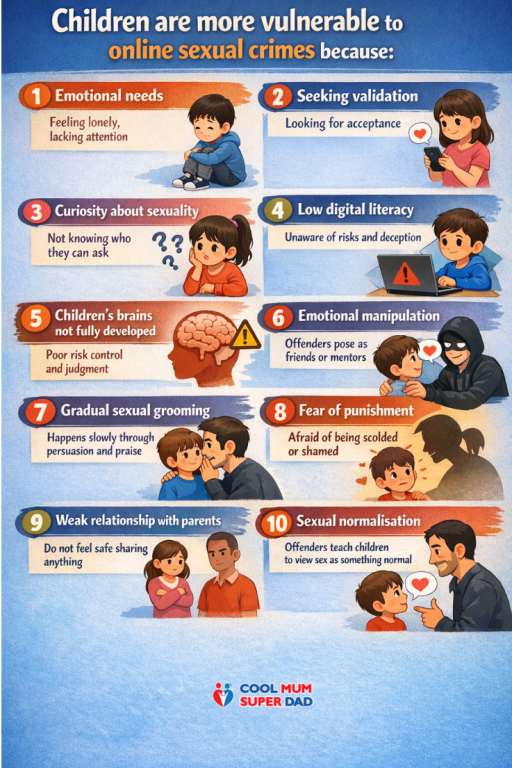
Below are some of the main factors that make children vulnerable to online sexual crimes.
1 Unmet emotional needs
When children feel lonely, neglected, or misunderstood, they tend to look for a place to express their feelings. Offenders are skilled at detecting these vulnerabilities and presenting themselves as good listeners.
2 Seeking validation and acceptance
Praise, attention, and sweet words make children feel valued. When they do not receive recognition at home or at school, false acceptance in the online world can feel deeply meaningful.
3 Curiosity about sexuality
Questions about the body and feelings are normal, especially among adolescents. However, when children do not know who is appropriate to ask, they search for answers on the Internet and that is where the risk begins.
4 Low digital literacy
Many children are unaware of fake identities or hidden intentions behind people who appear friendly online. Children easily trust others because they are not trained to recognize digital dangers.
5 Children’s brains are not fully developed
Adolescence is a period of physical and emotional change. The ability to assess risks and make sound decisions is still developing. Children are more likely to act based on emotions rather than long-term judgment.
6 Emotional manipulation
Offenders often pose as peers, mentors, or helpful adults. They use empathy, sympathy, and trust to influence children gradually.
7 Gradual sexual grooming
It rarely happens suddenly. It begins with casual conversations, followed by praise, sometimes gifts, and special attention, until boundaries are crossed without the child realizing it.
8 Children fear punishment if they ask their parents
A culture of blame without first understanding what happened (“blame culture”) within families, makes children afraid to confide in their parents. When children fear being scolded or shamed, they choose to remain silent. This fear keeps them trapped in dangerous situations.
9 Weak relationships with parents
Children who do not feel safe sharing their stories will not seek help. This emotional gap creates space for outsiders to take over the role of someone who understands them.
10 Sexual normalization
Offenders influence children to view sexual matters as something normal, humorous, or a special secret. When this happens, children no longer see it as a danger.
In conclusion
The best protection is not merely controlling devices, but building strong relationships, open communication, and continuous guidance. Children who feel loved, heard, and protected are more likely to speak up and are harder to manipulate.
Prevention begins at home before threats reach the screens of our children.

